
The Story of Bluetail Digitizing a Living Legend’s Aircraft Records
One of only two airworthy Boeing B-29 Superfortresses in the world trusted us with eighty years of history. We didn’t take that lightly.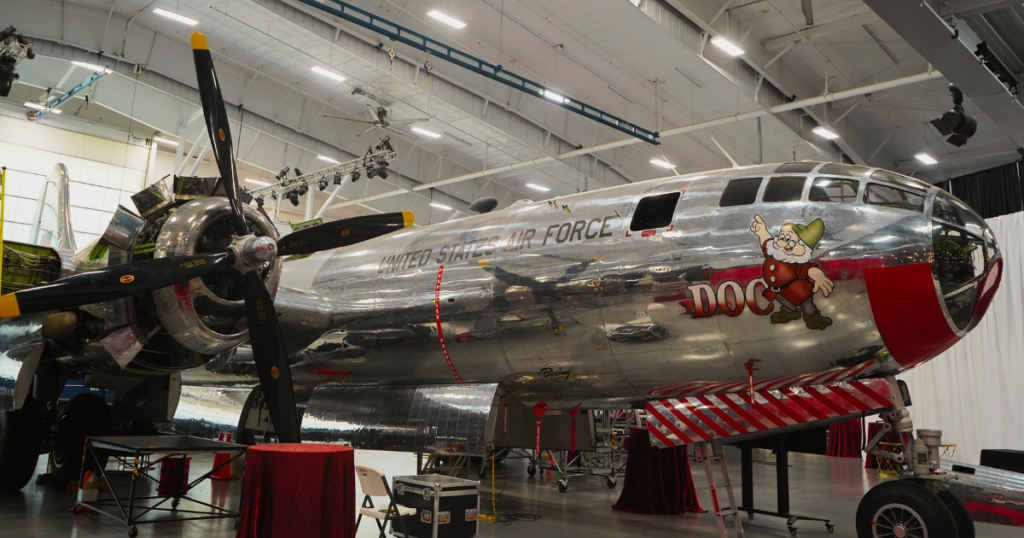
There are moments in this business that stop you cold — where the work transcends compliance deadlines and software demos and becomes something genuinely humbling.
Bluetail co-founder and CEO Roberto Guerrieri first learned about Doc’s Friends,Inc. a non-profit founded to restore the Boeing B-29 named “Doc”, and their mission to keep the B-29 (aka “Doc”) story alive in aviation. It was the kind of initiative that resonated immediately — a non-profit pouring heart and resources into preserving not just an aircraft, but a chapter of American history that younger generations are at risk of never encountering firsthand. Roberto reached out directly to Donnie Obreiter, Director of Maintenance for Doc’s Friends, Inc. The conversation that followed made one thing clear: this was exactly the kind of partner Bluetail’s community giving program was built for.
Bluetail’s Way to Give Back
Bluetail has a program dedicated to strengthening the aviation community. Once a year, we select an organization or individual we believe is making a meaningful contribution to aviation and we digitize their aircraft records at no cost. It’s our way of putting our technology in service of the people and missions that make this industry worth caring about.
In the past, that program brought us to another legend Jessica Cox, the world’s first licensed armless pilot, whose records we had the honor of scanning and organizing. When Doc’s Friends came onto Roberto’s radar, the decision was straightforward.
“Doc is a living lesson in history for generations to enjoy and learn from. I was inspired by the story of people of all ages and backgrounds coming together to get her airborne. The fact that my kids and grandkids have the opportunity to see her fly is truly an epic mission to support.”
— Roberto Guerrieri, Bluetail CEO and Co-Founder
The Story of Doc
Serial number 44-69972 rolled off the Boeing line in 1944 as part of a production run of 1,620 Superfortresses built right in Wichita. Delivered to the United States Army Air Forces in March 1945, she never saw combat, the war ended before she could. But her life was far from idle.
Converted to a radar calibration aircraft in 1951 and based at Griffiss Air Force Base in New York, the aircraft was given her name by the squadron’s crew following a whimsical tradition of naming their B-29s after characters in Disney’s Snow White and the Seven Dwarfs. And so 44-69972 became Doc.
By 1955 she had been modified to a TB-29 configuration and moved to Yuma County Airport in Arizona as a target tug. A year later, retired from the Air Force, she was sent to Naval Air Weapons Station China Lake to be used as a ballistic missile target. It seemed like the end of the road.
A 29-Year Mission to Bring Her Home
In 1987, Air Force veteran, Former Flight Engineer, and Continental Airlines employee Tony Mazzolini began the improbable task of saving Doc from the California desert. After years of negotiation, the Navy agreed to release the aircraft in exchange for a restored B-25 Mitchell to be donated to the National Naval Aviation Museum. Mazzolini tracked one down in South America, restored it to the Navy’s satisfaction, and completed the transfer in 1998.
Doc was towed to nearby Inyokern Airport, dismantled, and transported back to Wichita — back to the very plant where she was born. In February 2013, Doc’s Friends, Inc. took ownership and pushed the restoration across the finish line. On July 17, 2016 — sixty years after Doc last flew — she lifted off from Wichita. In July 2017, she appeared alongside the only other flying B-29, “FIFI”, at EAA AirVenture Oshkosh — a moment aviation fans had waited decades to see.
Digitizing Eighty Years of History
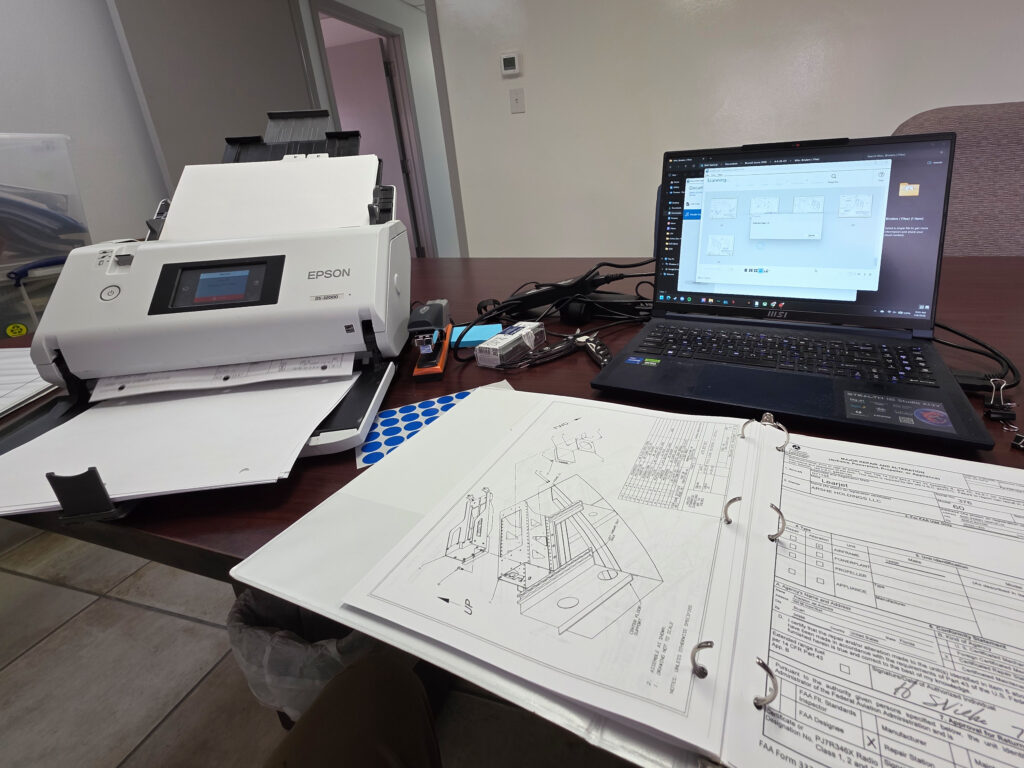
When our team arrived to begin scanning Doc’s records, we knew we were doing something different. These weren’t modern, standardized maintenance logs from a Part 135 operator running a modern fleet of jet aircraft s. They were documents spanning decades — handwritten entries in cursive, forms using formats long since retired, notations in the shorthand of mechanics who learned their craft when propeller-driven aircraft ruled the sky.
Some pages were crisp. Others were fragile. All of them were irreplaceable.
The person who did that work — who held those documents and scanned every one of them — was Thomas (Tommy) Larsen, a member of Bluetail’s Digital Services Team. For Tommy, this wasn’t just a field assignment.
Tommy’s grandmother shared that his grandfather served in World War II and flew aboard B-29s during his service. Standing inside Doc where his grandfather may have sat at roughly the same age or younger added a depth of personal meaning to this project.
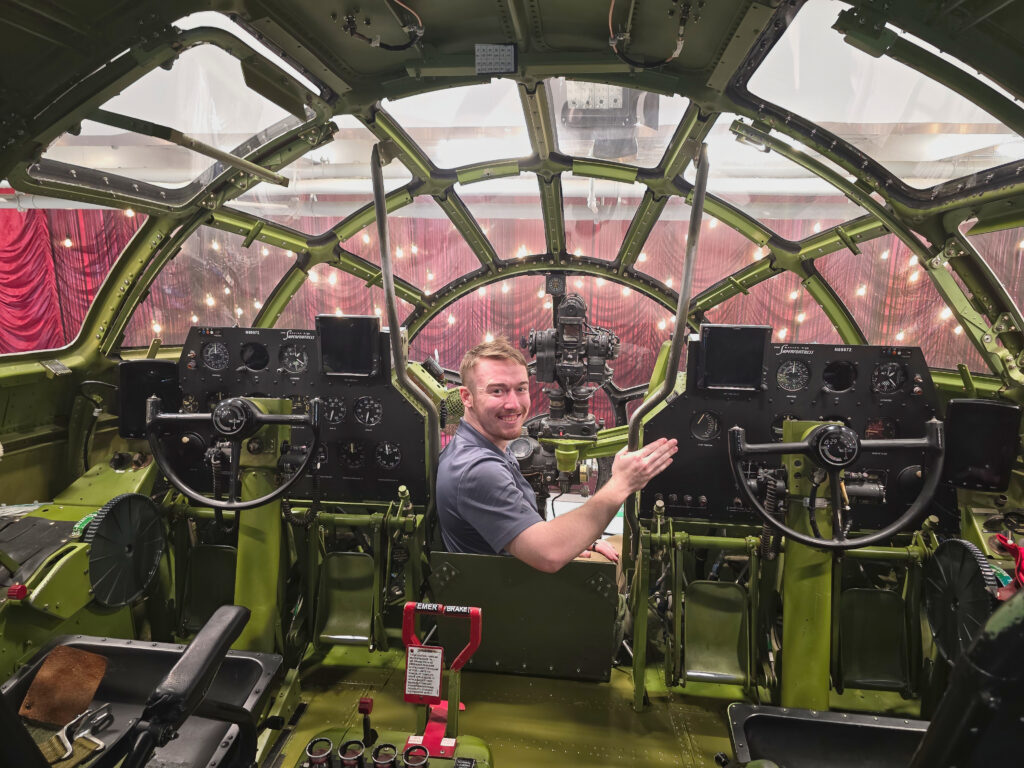
That kind of connection changes how you work. Tommy approached every document with the care of someone who understood, personally, that this was history that belonged to real people, real families, real sacrifices.
Working through the collection, Tommy scanned every document with the care you’d expect in an archive because that’s exactly what this is. Every entry, every signature, every grease-pencil annotation was captured in full. And then Bluetail’s AI went to work.
Our system ingested all of the records, organized each document chronologically, identified and indexed key maintenance events, and assembled a coherent, searchable digital logbook from what had been a physical archive spread across eight decades.
The result is a digital record that Doc’s Friends can search, reference, and share with confidence — the kind of organized, accessible documentation that any aircraft needs for airworthiness oversight and long-term preservation planning, and that a historic aircraft like Doc deserves for posterity.
“Being able to have searchable digital records and documents is a game changer for our maintenance team,” said B-29 DOC CEO Josh Wells. “Maintaining DOC is a meticulous process and our team needs access to technical data, parts lists and manuals that were written in the 1940s to support the skilled and precision work that it takes to keep our warbird airworthy. Deploying Bluetail’s technology and support to our maintenance team will further enhance our ability to keep DOC flying for generations to come.”
Why We Love What We Do
Bluetail was built on a genuine love of aviation. We work with operators running modern fleets in demanding environments every day, and we bring rigor and respect to that work. But Doc reminded us of something important. Every aircraft record is, at its core, a story — a record of human decisions, careful hands, and accumulated knowledge passed from one generation of maintainers to the next. That story deserved to be preserved. It deserved to be shareable. It deserved to be honored.
To the volunteers, staff, and supporters of Doc’s Friends, Inc. in Wichita — and to Donnie Obreiter for welcoming Tommy and trusting Bluetail with this mission — thank you. It was an honor in every sense of the word.
Here’s to many more airshows, many more flights, and many more generations of aviation fans looking up in awe at the most iconic warbird still gracing the sky. To learn more about Doc, upcoming airshows, or to contribute to Doc’s Friends, Inc. visit here.
Learn more about Bluetail and how we help digitize aircraft records here.